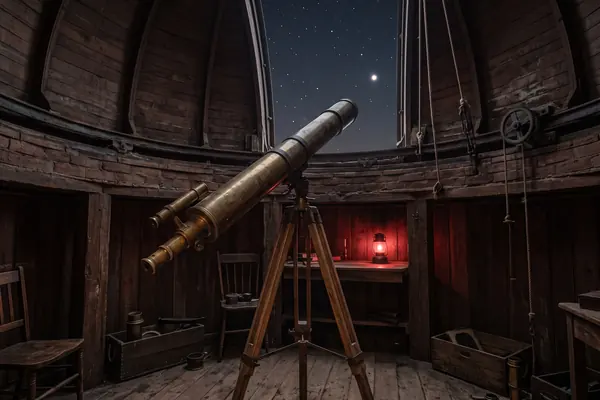
LOOKING UP
Moonlight is 1.3 s old
The Moon is about 1.3 light-seconds away. Radio questions to astronauts on the Moon took 2.6 seconds for the round trip.
Check other objects doodlelight
00LIGHT TRAVEL TIME
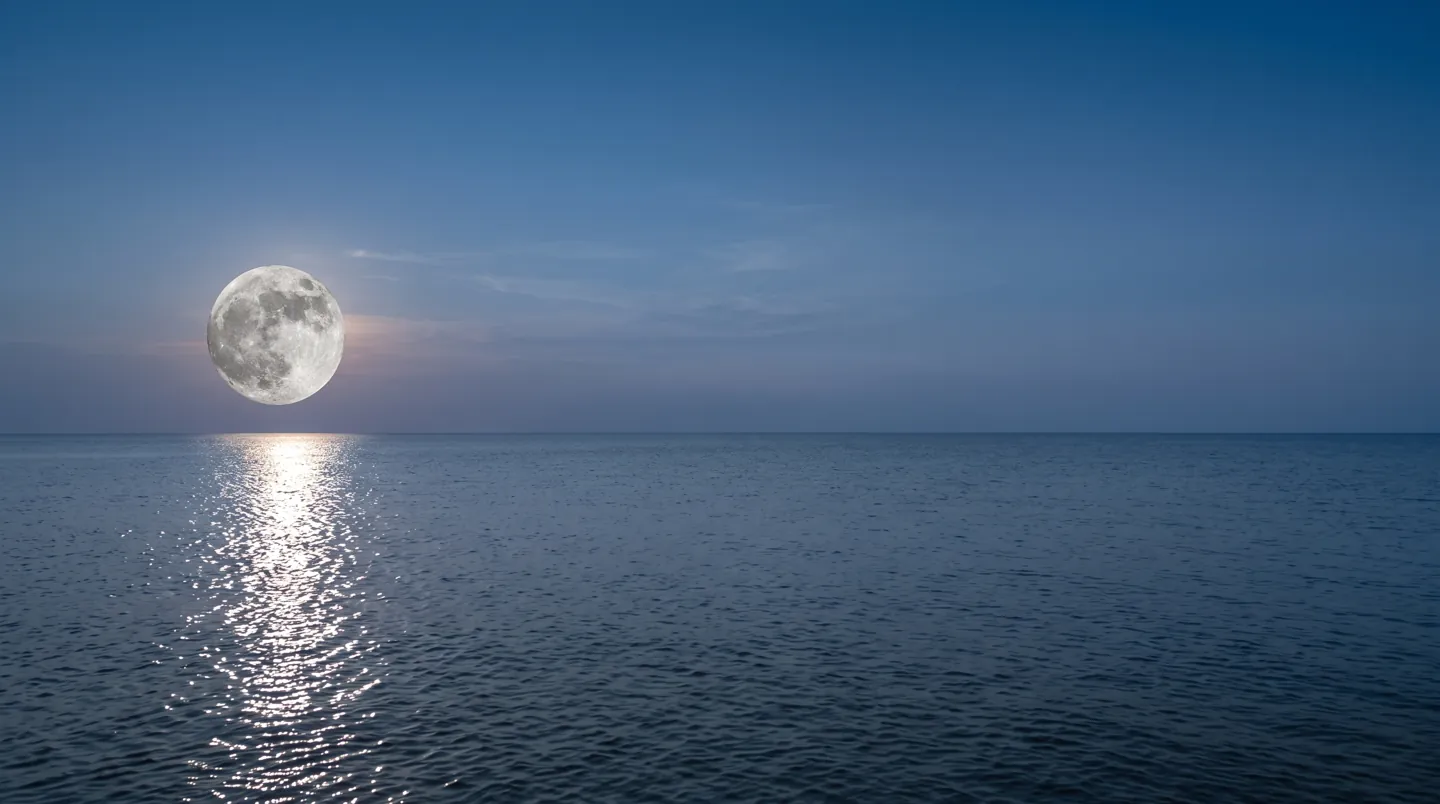
Every glance at the sky is a look back in time.
Light covers about 300,000 kilometres a second. That is quick enough to seem instant on Earth, and slow enough that moonlight is over a second old. The speed is now so well known that the metre is defined by it.
How old is that light?01Principles
02THE SHORT ANSWER
Exactly 299,792,458 metres per second in a vacuum.
Not a measurement any more, but a definition.
LOOKING UP
The Moon is about 1.3 light-seconds away. Radio questions to astronauts on the Moon took 2.6 seconds for the round trip.
Check other objects1676
Eclipses of Jupiter's moon Io came later when Earth was moving away from Jupiter. The delay showed that light takes time to travel.
How it was measured1848–49
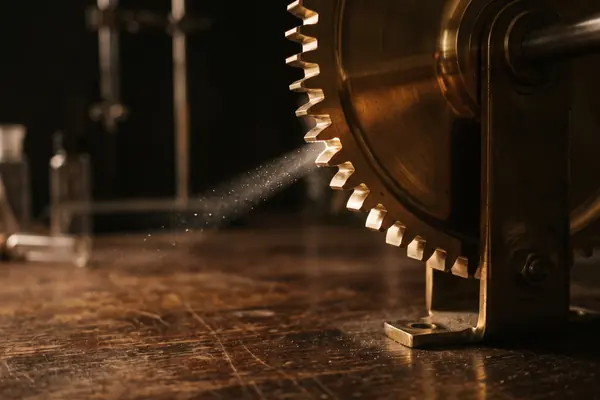
In 1848–49 a physicist measured the speed of light using a rotating cogwheel. In 2009 NPL and the BBC recreated the idea with a kitchen blender.
See the numbers03HOW OLD IS THAT LIGHT?
Choose an object to see how long its light takes to reach us. The bar shows how far back in time you are looking.
Travel times are approximate and use average distances. Never look directly at the Sun.
04TWO NUMBERS WORTH KNOWING
The first estimate was in the right range.
Today the number is fixed by definition.
24.4% low
How far below the true speed
The 1676 timing implied light needs about 22 minutes to cross Earth's orbit. With modern orbits that gives 226,663 km/s, 24.4% below the true 299,792 km/s.
1676 ESTIMATE · IO ECLIPSES
299 792 458 m/s
Speed of light in vacuum
A metre is the distance light travels in a vacuum in 1/299,792,458 of a second. The speed is fixed exactly, and the metre follows from it.
SINCE 1983 · BIPM / NPL
The wording of the metre's definition was updated in 2019; the effect is unchanged. NPL says lengths can now be traced from a few picometres up to the distance of the Voyager 1 spacecraft.
05FOUR STEPS TO A NUMBER
It took three centuries to go from showing that light has a speed to building our unit of length on it.
Io orbits Jupiter every 42½ hours. Its eclipses looked later as Earth moved away from Jupiter and earlier as it moved closer: the extra time was light's journey.
In 1848–49 the speed of light was measured with a rotating cogwheel, which chopped a beam of light. NPL and the BBC recreated the experiment in 2009 with a kitchen blender.
Since 1983, the metre has been defined as the distance light travels in a vacuum in 1/299,792,458 of a second, so the speed itself is now fixed.
For long distances, such as Earth to the Moon, you time a pulse of light. For short ones, lasers count wavelengths.
06WHY IT MATTERS
Before light, the metre was a fraction of the Earth: one ten-millionth of the distance from the north pole to the equator, measured by expeditions between 1792 and 1799 with an accuracy of about 0.02%.
Because the speed of light in a vacuum is regarded as a universal constant, a good clock now makes a good ruler. Interferometry with a stable laser can measure lengths of up to 100 metres directly, to within a part in a few million.
07QUESTIONS PEOPLE ASK
In a vacuum, exactly 299,792,458 metres per second, because the metre is defined from it. That is about 300,000 kilometres, or 186,000 miles, every second.
Since 1983 the metre has been defined as the distance light travels in 1/299,792,458 of a second. The number is fixed, and the metre is measured against it.
In 1676, timings of eclipses of Jupiter's moon Io, made at the Royal Observatory in Paris, showed that light takes time to travel. The idea was confirmed in 1729.
Yes, slightly. Moonlight is about 1.3 seconds old, sunlight about 8 minutes, and starlight from Sirius about 9 years.
In 1848–49 the physicist Hippolyte Fizeau measured it using a rotating cogwheel. NPL and the BBC recreated his experiment in 2009 with a kitchen blender.
A distance, not a time: how far light travels in a year. PBS's Seeing in the Dark gives the example of Alpha Centauri, whose light takes more than 4 years to reach us, so astronomers say it is 4 light years away. Our own galaxy, the Milky Way, is roughly 100,000 light years wide.
It depends where you look. Light from Betelgeuse takes about 430 years, so it left the star in the late 1500s; light from the Orion Nebula left about 1,500 years ago, before the telescope was invented; and the Andromeda Galaxy's light set off more than 2 million years ago. The farther away an object is, the older its light.
08Sources
ABOUT THIS NAME
doodlelight.com is part of the DoodleSale portfolio. It isn't in an auction right now, but you can ask about leasing it.